
A “faux fur” description identifies the seller's stated fur-like material, but it does not describe every component of a slipper. For a gift recipient with a specific material preference, read that wording alongside the information about the rest of the pair.
Comfy Air Sneaker describes the Fuzzy Curly Fur Memory Foam Loafer Slippers as having faux fur. The photograph shows a curly black surface and a contrasting light-coloured sole; the texture alone cannot establish fibre composition.
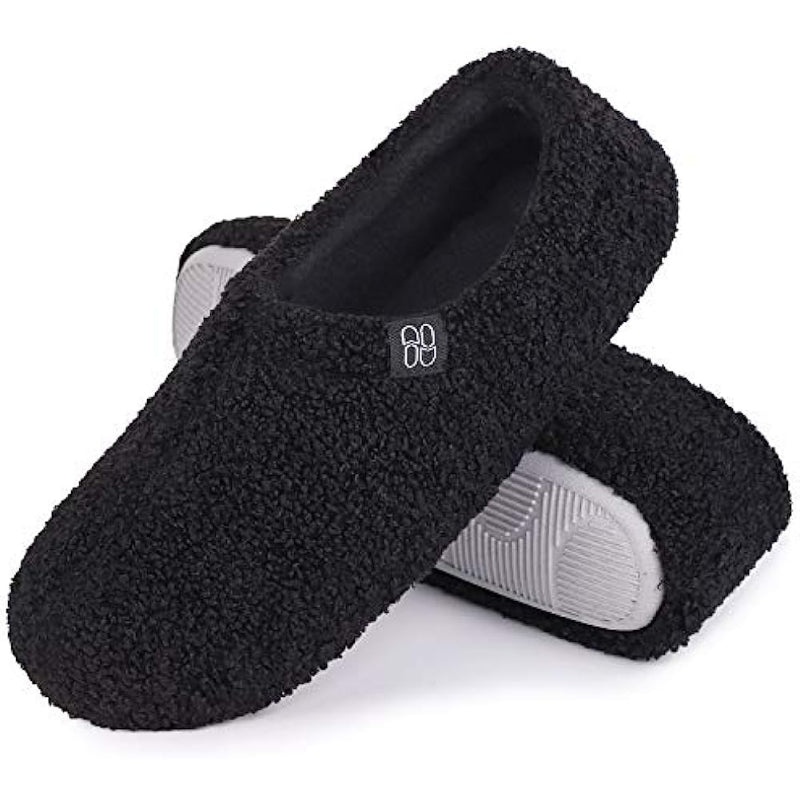
Ask what the preference actually covers
A recipient may be avoiding animal fur, looking for a particular fibre, or seeking information about all components of a product. Those are different questions. Agree on the requirement before treating one appealing word as the whole answer.
For example, “I want a fur-like appearance without animal fur” is more specific than “something fluffy.” A requirement covering every material also needs information beyond the visible upper.
Keep each component attached to its evidence
Separate the upper, lining, footbed, sole and decorative details when reading a material description. A statement about the upper should not be copied into the other categories.
If the recipient needs confirmation about the whole product, ask the store for the exact model's material breakdown and any evidence relevant to that requirement. Do not turn the phrase faux fur into an independently verified certification or a promise about adhesives, trims or other unnamed components.
Settle the material question before the gift choice
For Black Friday on November 27, 2026, you can shortlist the design and identify the missing material information. If you order on Cyber Monday, November 30, keep any answer with that same product reference and selected option.
The useful result is a gift whose stated materials answer the recipient's preference. Fit, feel and care remain separate decisions; a curly-looking photograph cannot settle them.